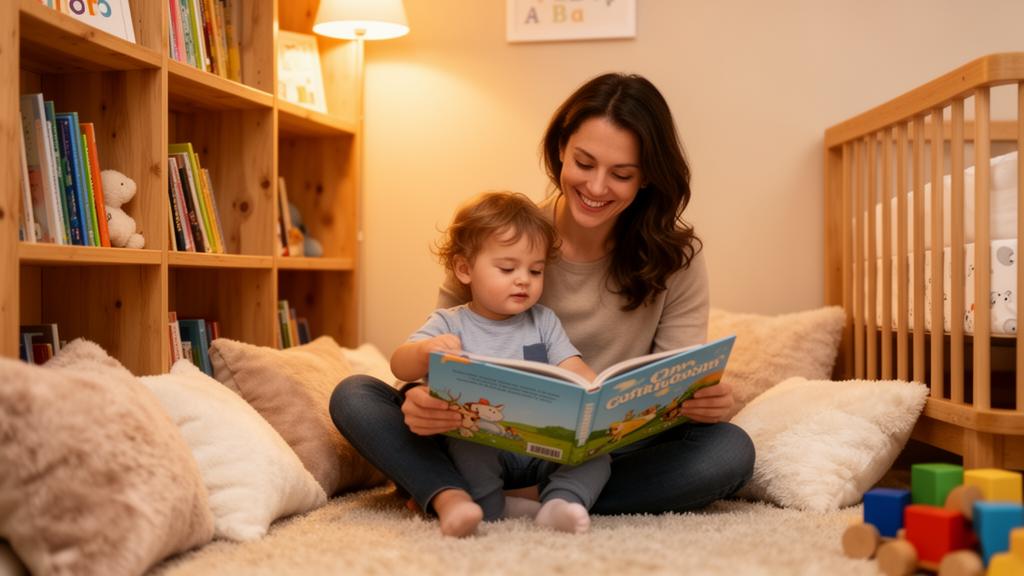
Why Read to Babies and Toddlers?
Children who are read to regularly from a young age develop larger vocabularies, stronger listening skills, and a deeper understanding of the world. Reading together is also one of the most powerful bonding activities a parent can do.
At Marylebone Village Nursery, stories are part of every day. Our cosy reading corners, group story sessions, and Montessori language materials all support early literacy — and the joy of books.
The Science Behind Early Reading
Research from the National Literacy Trust shows that children who enjoy books at home before starting school are five times more likely to read above average for their age. Even before babies understand words, hearing language builds the neural connections needed for communication.
How Reading Supports the EYFS
The EYFS framework identifies Communication and Language as a prime area of learning. Shared reading directly supports this, along with Literacy and Personal, Social and Emotional Development.
Reading Tips by Age
Babies (0–12 months)
- Choose high-contrast board books and cloth books they can mouth safely
- Use animated voices and facial expressions to hold attention
- Keep sessions short — even 2–3 minutes of shared reading counts
- Point to pictures and name objects to build early vocabulary
Toddlers (1–3 years)
- Let them turn pages and choose books — this builds independence
- Ask simple questions: 'Where's the cat?' or 'What colour is the ball?'
- Re-read favourites — repetition builds comprehension and confidence
- Relate stories to their own experiences to deepen understanding
Preschoolers (3–5 years)
- Introduce longer stories with simple plots and characters
- Encourage them to retell stories in their own words
- Visit your local library together for new discoveries
- Connect books to activities — read about nature, then explore outside
Creating a Reading-Rich Environment
Our Montessori approach places books at child height, with covers facing forward so children can browse independently. At home, try creating a small reading nook with cushions and a low shelf of rotating titles.
Making Story Time a Daily Habit
The best time to read is whenever it works for your family. Bedtime is classic, but morning routines, after-lunch wind-downs, and even bath time with waterproof books all count. Consistency matters more than duration.
See Our Reading Programme in Action
Visit our nursery to explore our book corners, story sessions, and language-rich environment.